A legal quote is easier to understand when you separate the work, the way it is priced and the expenses outside the lawyer’s own fees. You do not need to guess what an unfamiliar item means. Ask the office to explain the proposed service in ordinary language before you decide.
Ask for the scope, assumptions, exclusions and expected total—not just an hourly rate or a headline price.
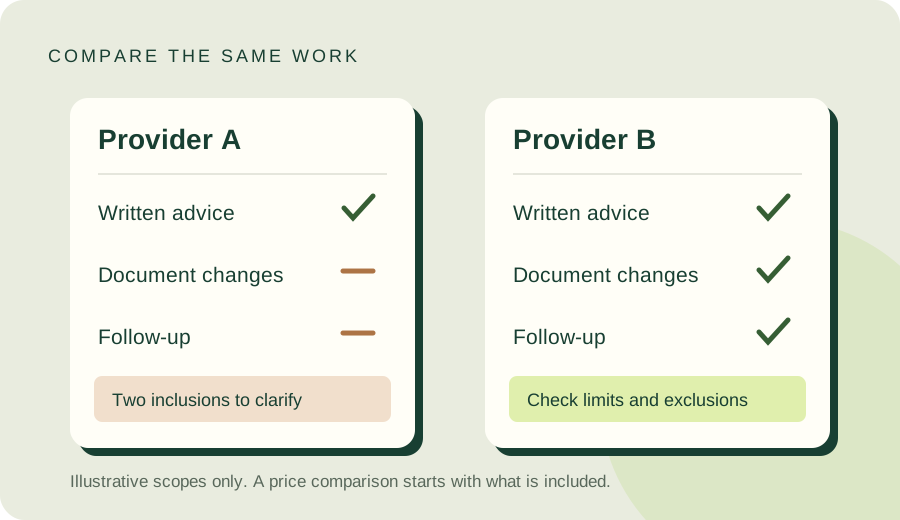
Separate professional fees from other expenses
Professional fees pay for the provider’s work. Other amounts may relate to external services or expenses, often called disbursements. Ask which items are expected in your matter and whether they are included in the figure you have been given. Also ask whether GST is included where applicable. A total shown in a large font may not be the full amount you will pay if its exclusions are listed elsewhere. Rather than guessing, ask the office to put the components side by side for you.
- What work does your professional fee cover?
- Which external expenses are included, estimated or still unknown?
- Does this figure include GST where applicable?
Understand how the price is calculated
With hourly charging, ask who will do the work, their rates and how time is recorded. With a fixed fee, focus on the defined tasks and the circumstances that take work outside that price. An estimate helps you plan but needs its assumptions explained; do not assume it is a cap. The details of the arrangement matter more than the label. Ask whether the service is priced in stages, and what information the office needs to give a more useful estimate. Specific costs rules differ by jurisdiction and circumstances; this guide does not determine your legal rights.
Read a proposal in three passes
First identify the deliverable: the meeting, document, written advice or representation being offered. Second identify the pricing method and what assumptions support it. Third read the exclusions and the process for changes. This approach makes a dense proposal easier to discuss. For instance, a fictional fixed-fee document review might exclude amendments and discussions with another party. That could be a perfectly clear offer for the first task, but it would not tell you the price of the later tasks unless those are separately explained.
Ask what a first consultation includes
Before booking, confirm its duration and price, whether documents are read beforehand and whether you receive written advice afterwards. An intake call to check whether an office can help is different from an advice appointment. A free initial discussion may have a limited purpose. Ask what happens if the meeting needs more time and whether any consultation charge is credited towards later work. These are questions to ask, not standard inclusions we can promise across the directory.
Work through a fictional subtotal
Suppose a proposal lists a $600 professional fee and $80 of confirmed additional amounts, both on the same stated GST basis. Their sum is $680. Those figures are invented solely to demonstrate addition; they are not a typical fee or a quote for a real service. The sum still does not tell you whether later work is included, whether further expenses may arise or whether the scope is suitable. Our worksheet therefore labels the result a known subtotal, keeps blank amounts unknown and shows scope differences separately.
Plan for changes rather than guessing a final bill
A straightforward document review can become a negotiation if you ask the lawyer to speak with another party. New documents or a different instruction can also change the work. Ask how the office will explain a revised scope and cost, who can authorise extra work and when you will receive updates. For a staged matter, ask what the next stage involves before agreeing to it. A budget conversation can identify a narrower first task, but the provider needs to explain whether that task would be appropriate for your situation.
- Which events could change the price?
- How will you tell me before doing additional work?
- What will I owe if the work stops part-way through?
Ask about staged work and payment arrangements
For a matter that could develop over time, ask what the first stage achieves, what triggers the next stage and how its cost will be discussed. If you need a payment arrangement, ask whether one is available, when payments fall due and what the agreement says about changes or missed payments. Do not assume every office offers the same terms. A manageable payment schedule does not make an unsuitable scope suitable, so keep the service discussion and the payment discussion connected.
Treat conditional-fee advertising as a starting question
If you see “no win, no fee”, ask what counts as a win and what amounts could still be payable under the proposed arrangement. Ask about expenses and any risk of paying another party’s costs. Do not interpret an advertisement as a promise that proceeding is cost-free. Get an explanation of the actual agreement, including what happens if you end it, and seek independent advice if you do not understand the terms. The Victorian regulator’s consumer resource below explains issues to ask about; other jurisdictions and agreements may differ.
Questions to ask before authorising more work
When the matter changes, use the earlier quote as a reference rather than assuming it still covers everything. Ask the provider to identify the new task, why it is proposed, the expected additional cost and any effect on timing. If an estimate is revised, ask which assumption changed. This is about understanding instructions before giving them, not deciding whether a particular charge is legally valid. Costs disputes and rights require current advice or regulator guidance for the relevant jurisdiction.
Keep a clear record and raise questions early
Save the quote, agreed scope and later changes together. When a bill arrives, compare it with that record and ask for an explanation of unfamiliar entries. If you are concerned about a bill or service, look for the relevant regulator’s current consumer guidance promptly rather than assuming every state uses the same process or time limit. If the proposed work is unaffordable, say so before instructing it and explore assistance pathways. There is no reliable single “average lawyer fee” that tells you what your particular matter should cost.
Questions you might still have.
Is a fixed fee always the total price?
Check its scope and exclusions. Ask whether external expenses, GST where applicable and later stages are included.
Is a free consultation the same as free representation?
No. Confirm exactly what is offered and what any further work would cost.
Can this guide tell me whether my bill is fair?
No. That requires consideration of your arrangement, work and applicable rules. Use the relevant regulator’s consumer guidance or obtain advice.
General preparation information, not legal advice. Rules and options depend on your circumstances and jurisdiction. Check current official information and speak with a qualified adviser about documents, rights or deadlines.
Make your next conversation easier.
Build a private enquiry plan or compare two quotes, then find offices and check the arrangements that matter to you.
Use the preparation tools ↗Find local legal services ↗