Two legal quotes can look like competing prices while describing different jobs. Put the work side by side before deciding which offers the better fit. This guide gives you a comparison you can keep privately, without uploading your quotes or personal information.
A useful comparison answers “what will each provider do for this amount?” before asking “which costs less?”
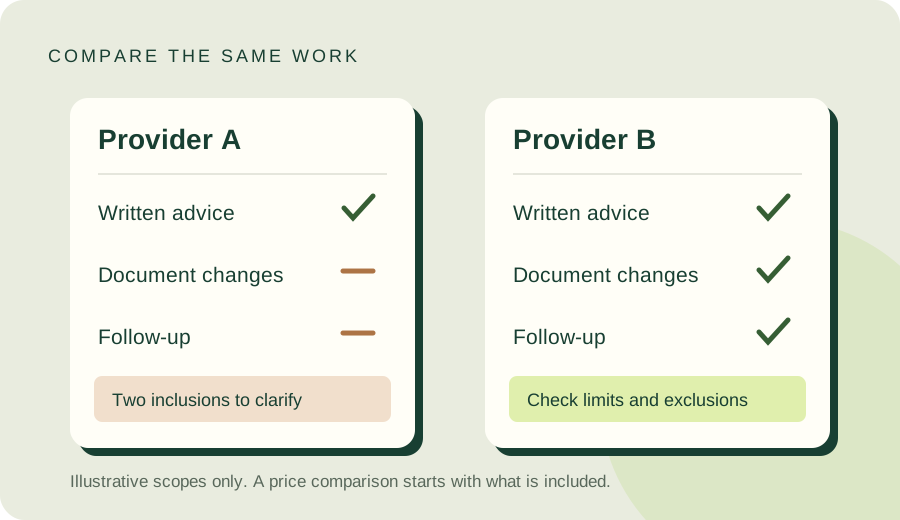
Give each office the same brief
Write a short description of the work you want, the jurisdiction and any known dates. Identify whether you want advice, document preparation, negotiation or representation. If you do not know which service is needed, ask the provider to explain its recommendation and assumptions. Tell each office if the brief changes; otherwise, the prices may relate to different instructions. Share detailed documents only through the office’s agreed intake process after confirming who you are dealing with. A concise common brief makes differences in the replies easier to spot.
Compare deliverables, not service labels
“Contract review” may mean a conversation about selected issues, a written report or proposed amendments. Ask how many documents or versions are covered, whether there is a follow-up meeting and whether correspondence with another party is included. Record what you will receive at the end. A service with a broader scope may suit your needs, or you may only need the first stage. The important point is to understand that choice rather than buying an unclear bundle.
- Work included and work expressly excluded.
- Written advice, revised documents or a meeting: what will I receive?
- Number of drafts, revisions or follow-up conversations included.
- Who does the work and the expected delivery arrangements.
Keep a comparison record you can actually use
A private note can be more useful than a numerical ranking. For each proposal, record the date, the named contact, the precise deliverable, the price basis and the questions still open. Keep the quote itself alongside your summary so a shorthand note does not replace the terms. If an office later clarifies the offer, update the note and keep that reply too. You can use our interactive worksheet to compare known amounts and selected inclusions; it deliberately does not score lawyers or select a winner.
Work through a fictional example
Suppose you need a draft commercial agreement reviewed. Provider A offers a fixed price for reading the draft and one advice call. Provider B offers a higher price that also includes written amendments and one round of correspondence with the other party. These are fictional scopes, not market quotes. If you only need an initial explanation, A may cover that stage. If you want help changing the agreement, ask A to price that additional work before comparing the totals. Neither quote can be judged solely by which headline number is lower.
Example: equal totals can still mean different work
Imagine two fictional proposals each total $800 on the same stated basis. A includes a meeting and written advice. B includes reading a document and a phone explanation but prices written advice separately. The equal numbers do not establish equal services. Ask which deliverable you actually need and whether both providers can quote that same task. These are invented examples, not descriptions of listed offices or typical prices. The decision is about understood scope and suitability, not finding a numerical tie-breaker.
Make unknowns visible
Use “not confirmed” rather than treating a blank as zero. External expenses, GST, later stages and additional documents can change the comparison. Ask whether an estimate could change, what assumptions support it and how approval for extra work is handled. If one office cannot quote without seeing particular documents, that is useful information about what still needs to be clarified. A carefully qualified estimate can be more informative than a confident number with an unclear scope.
Example: an unknown expense is not zero
A proposal may give a professional fee but say an external expense will be confirmed later. Leave that expense marked unknown in your comparison. Entering zero makes the offer appear more complete than it is. Ask when an estimate will be available, what affects it and how the expense would be approved. Even after you have a known subtotal, check the exclusions and later stages. A total of the information currently available is not a guarantee about the eventual bill.
Include practical fit in your decision
Add a note about appointment availability, who will handle the matter and how you can ask questions. A written comparison should help you remember the conversation, not produce an artificial score for legal ability. Decide which details are essential for you: perhaps an accessible appointment, a safe callback time or work completed before a stated date. Ask the provider whether it can accommodate them. If timing is urgent, seek appropriate advice promptly rather than waiting for a perfect spreadsheet.
Finish with the same questions for both offices
Before choosing, ask each office to confirm the work included, the work excluded, the communication arrangements and the next step required to engage it. Tell the office if the brief has changed since the proposal was prepared. If you cannot reconcile the two scopes, describe the difference directly instead of trying to interpret it alone. For an urgent issue, seek appropriate advice about timing promptly; completing a comparison worksheet does not protect a date or put anyone in charge of your matter.
Put the quotes side by side.
| Compare | Provider A | Provider B |
|---|---|---|
| Exact work and deliverable | Record the scope | Record the scope |
| Professional fee and pricing method | Confirm | Confirm |
| GST and external expenses | Included, excluded or unknown? | Included, excluded or unknown? |
| Revisions and additional work | What changes the price? | What changes the price? |
| Contact person and timing | Who, how and when? | Who, how and when? |
| Unanswered questions | Clarify before instructing | Clarify before instructing |
Questions you might still have.
Should I choose the cheapest quote?
Compare the service you need, its exclusions and practical arrangements first. A cheaper quote may cover a different stage or fewer tasks.
Can I ask an office to clarify a quote?
Yes. Ask specific questions about deliverables and extra costs so you can understand the proposed engagement.
General preparation information, not legal advice. Rules and options depend on your circumstances and jurisdiction. Check current official information and speak with a qualified adviser about documents, rights or deadlines.
Make your next conversation easier.
Build a private enquiry plan or compare two quotes, then find offices and check the arrangements that matter to you.
Use the preparation tools ↗Find local legal services ↗